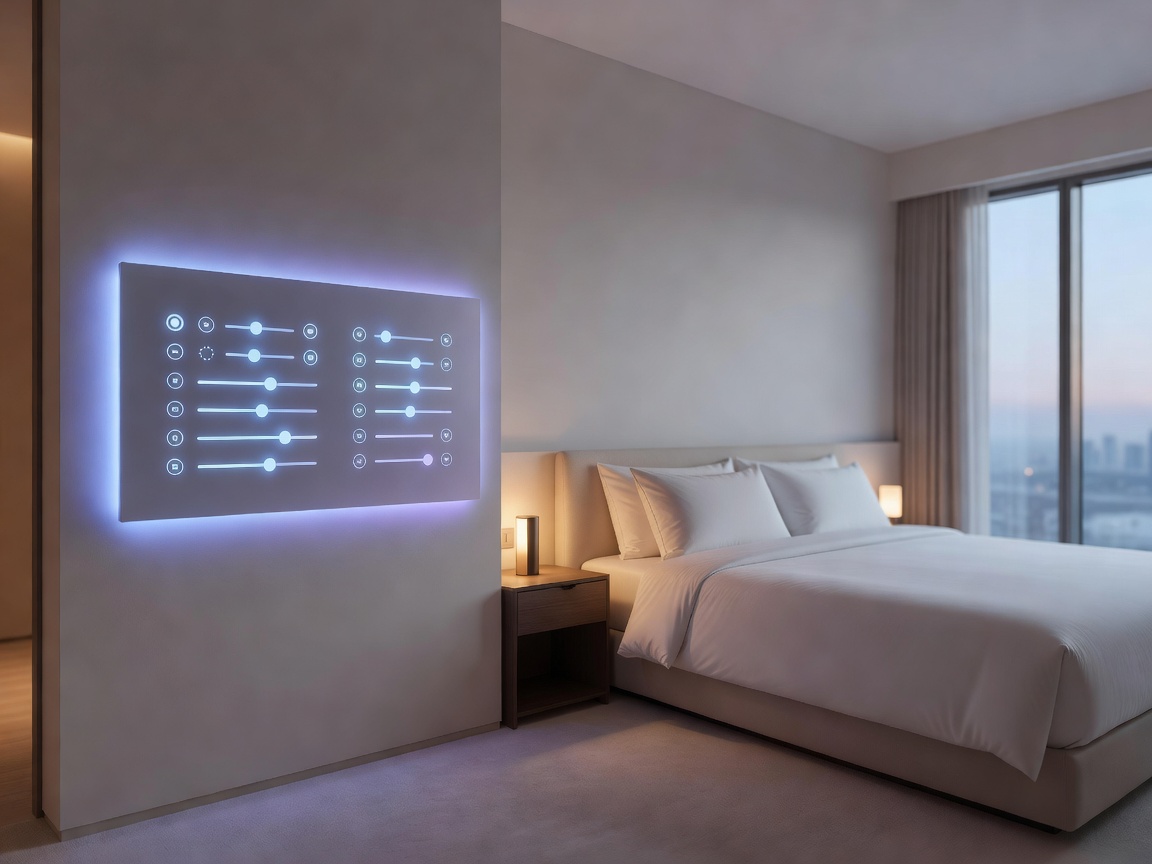
The Architecture of an Intelligent Room
The traditional hotel room is a passive space. The guest arrives, manually adjusts the thermostat, finds the light switches, and attempts to figure out the television remote. The modern "Smart Room," built on the Internet of Things (IoT), flips this paradigm. The room becomes an active participant in the guest experience, capable of responding to voice commands, smartphone apps, and automated routines.
This is achieved by networking disparate hardware elements—thermostats, blinds, lighting rigs, televisions, and locks—onto a centralized local network. A localized hub processes inputs and synchronizes the environment based on predetermined algorithms or direct user commands.
Core Components of the Smart Room
Implementing a smart room involves multiple layers of integrated technology. Here are the primary drivers of the IoT guest experience:
1. Climate and Energy Management
Smart thermostats are the most financially rewarding IoT upgrade for hotel operators. Unlike traditional systems that cool an empty room all day, IoT thermostats use infrared occupancy sensors and door-lock data to determine when a room is vacant. When empty, the system drifts to an energy-saving baseline. When the guest unlocks the door, the system aggressively returns to the guest's preferred temperature before they even reach the bed.
2. Lighting and Ambiance Automation
Smart lighting systems allow for "scenes." A guest can select "Relax" on an in-room tablet, causing the blinds to lower, the main overheads to dim, and warm bedside lamps to illuminate. Furthermore, motion-activated ambient lighting under the bed can assist guests navigating to the bathroom in the middle of the night without requiring them to find a light switch.
3. Voice Control Hubs
Enterprise versions of consumer voice assistants (such as specialized Amazon Echo or Google Nest devices) serve as the frictionless interface. Guests can request room service, ask for fresh towels, or command the TV simply by speaking.
The Data and Privacy Dilemma
The transition to IoT-enabled spaces introduces substantial privacy considerations. A room equipped with microphones, occupancy sensors, and granular usage tracking generates vast amounts of data.
- Microphone Anxiety: Many guests are uncomfortable with voice assistants in intimate spaces. Industry standards require these devices to be muted by default upon check-in, requiring a physical button press by the guest to activate, and enterprise hardware ensures voice data is wiped completely between stays.
- Data Security: The sheer number of connected endpoints expands the attack surface for bad actors. If a smart lock shares a network with the guest Wi-Fi, vulnerabilities can be exploited. Network segmentation—keeping the IoT devices on an entirely separate VLAN from guest internet traffic—is a mandatory security practice.
Personalization Across Stays
The true long-term value of the smart room lies in profile building. If a loyalty member stays at a property in London and sets the temperature to 19°C, requests extra pillows, and watches a specific streaming service, this data is saved to their centralized profile. When they check into a sister property in New York a month later, the smart room is pre-configured to 19°C, the TV is logged into their preferred apps, and housekeeping has already placed the extra pillows on the bed. This level of predictive hospitality is the ultimate goal of the IoT revolution in hotels.